
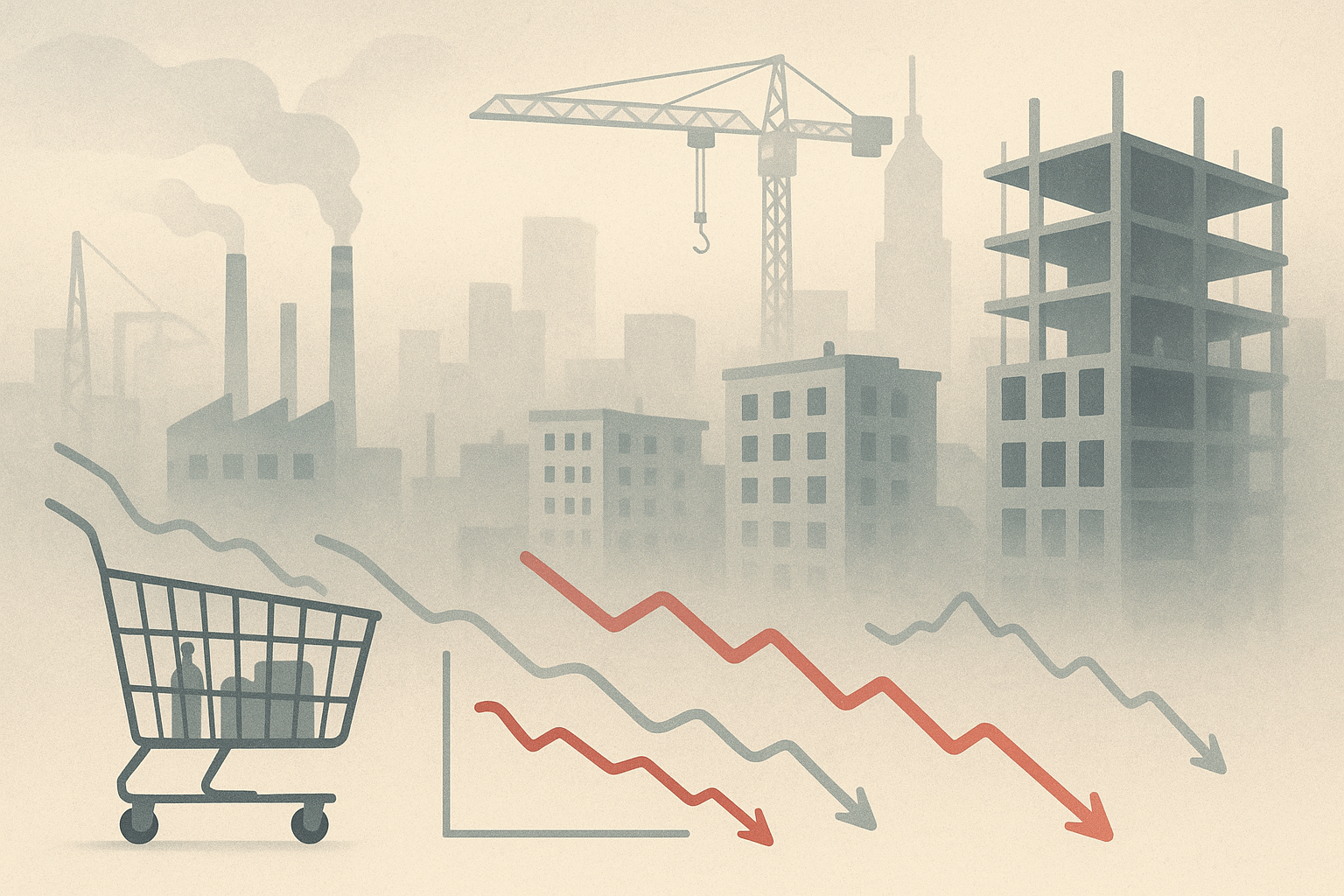

China’s economic slowdown intensified in November, with key indicators for consumption, investment, and industrial output all falling short of expectations.
The latest data underscore the challenges facing policymakers as they attempt to rein in excess supply while struggling to revive domestic demand and stabilise the prolonged downturn in the property sector.
Consumption and output miss expectations
Retail sales, a key gauge of household demand, rose just 1.3% in November from a year earlier, sharply below the 2.8% growth forecast in a Reuters poll of economists.
The reading also marked a significant slowdown from October’s 2.9% increase, highlighting persistent weakness in consumer spending.
Industrial production expanded 4.8% year-on-year, undershooting expectations for a 5% rise and recording its weakest growth since August 2024.
Economists pointed to subdued domestic demand and uneven recovery across sectors as key factors restraining output.
Analysts at Goldman Sachs have flagged declining auto sales as a major drag on retail activity.
Data from the China Automobile Dealers Association showed auto retail sales by volume fell 8.1% in November from a year earlier to 2.23 million vehicles, the first such decline in three years.
The drop followed pauses in trade-in subsidies by several local governments.
Consumer demand was also affected by the earlier-than-usual start of the Singles’ Day online shopping festival.
Major e-commerce platforms extended promotions from early October through Nov. 11, pulling some demand forward.
Even so, sales disappointed, with gross merchandise volume rising 12%, compared with 20% growth last year, according to Syntun.
Investment slump and property sector pressures
Fixed-asset investment, which includes property, contracted 2.6% in the January-to-November period from a year earlier, worse than economists’ expectations for a 2.3% decline.
The downturn deepened from a 1.7% contraction recorded in the January-to-October period, marking the sharpest slump since the pandemic outbreak in 2020, according to Wind Information.
Real estate investment dropped 15.9% in the first 11 months of the year, compared with a 10.3% decline in the previous period, underscoring the severity of the property downturn.
Home price declines also intensified in November, with new home prices in tier-one cities falling 1.2% year-on-year, while resale home prices dropped 5.8%.
“The contraction of fixed asset investment and the drop in property prices in recent months have been transmitted to consumer sentiment,” said Zhiwei Zhang, president and chief economist at Pinpoint Asset Management, who expects more supportive fiscal and monetary measures in the first quarter of next year.
Policy pledges and lingering concerns
Chinese policymakers have pledged further support to boost domestic demand in 2025.
The finance ministry said it plans to issue ultra-long-term special government bonds to fund projects related to national security, equipment upgrades, and consumer goods trade-in programmes, while increasing its investment budget to cushion the investment slowdown.
However, analysts remain cautious. “It is hard to generate a meaningful pickup in consumption without clearer improvement in job prospects and wage growth,” said Zavier Wong, market analyst at eToro.
Urban unemployment held steady at 5.1% in November, while youth unemployment stood at a more elevated 17.3% in October.
Despite domestic headwinds, China remains on track to meet its official growth target of “around 5%,” supported by strong exports to non-US markets.
The country’s trade surplus surged to a record $1.1 trillion in November, raising concerns about reliance on external demand.
IMF Managing Director Kristalina Georgieva has urged China to accelerate efforts to boost consumption and rebalance growth away from exports.
The post China’s economic slowdown deepens in November as weak demand weigh on growth appeared first on Invezz
